FEAR vs. HOPE: Which Is More Powerful?

Editorial, Featured

The Mitt Romney campaign is reeling this morning as it contemplates the best strategy for dealing with one of it’s supporters controversial comments. Ted Nugent, a legendary musician and Romney supporter, set off a firestorm yesterday when he warned that if President Barack Obama, were re-elected he would “be in jail or dead”. He further signaled that the current President’s re-election would drive him to violence by comparing the President to a coyote that had invaded the homes of the American people and urinated on their furniture. “Its not the coyotes fault…” said Nugent, “its your fault for not shooting the coyote”. Nugent’s comments have drawn surprisingly little reaction from Republicans and right wing pundits. Few if any, have condemned Nugent’s threats of violence. The silence is most notable from Mitt Romney himself. The refusal to comment is striking in part because it contrasts directly with a recent controversy in which a prominent Democrat (Hilary Rosen) insulted Romney and his wife. Republicans demanded that virtually every democrat, including the President repudiate the comments (which they did condemn, publicly).

Nugent wasn’t the only Romney supporter that made noteworthy comments yesterday. Congressman Louie Gomert was asked if he was enthusiastic about voting for Romney. He replied that he was more “desperate than excited”. The Romney campaign has faced a single persistent problem. No one in the Republican Party, let alone the country, is excited about his candidacy. Romney’s own party has no faith in his core values or policies. Romney won his primary by drowning his republican opponents in cash. He ran ads that most in his own party regarded as demonstrably false.Unfortunately, when a candidate cannot inspire his base through the power of his personage, he must inspire them through fear.

In November, the Fear Strategy will be expanded to the general electorate. The Republicans will argue that the nation will not survive if President Obama is re-elected. They will not persuade voters through the power of their ideas; they will instead rely on the dread inspired by imagined consequences. Unlike the Republicans, President Obama cannot run, by attempting to prove a negative. He will have to defend his record and his ideas. Although, insiders are warning that the re-election campaign will be more aggressive then the first election, President Obama will likely run on some variation of his 2008 slogan of Hope and Change. The 2012 race will be a choice between Hope and Fear. Which is truly more powerful? Will Hope triumph of Fear? We will see.
SHOULD DRUGS BE LEGALIZED? President Obama Open To Debate (Editorial)

Editorial, Featured

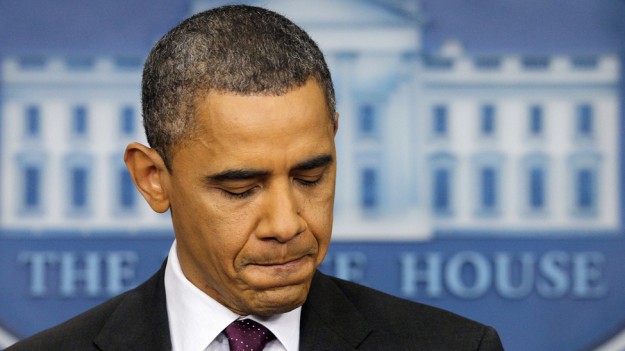
Should drugs be legalized? President Obama waded into the controversial debate during his visit at the sixth Summit of The Americas in Cartegena, Columbia. The President, responded to a question about the potential for legalization, a policy favored by many in Latin America as a way of alleviating the pressures of the narco war on beleaguered latin american nations. President Obama stated plainly that while he was personally against the prospect of legalization, he would be open to the debate. 

The President has, on more than one occasion flirted with politically perilous topics. At times he has over-estimated the national appetite for (and discipline to sustain) the debates that are common-place in the halls of academia, from which he hales. I believe that this is yet another example of his professorial nature rearing its ugly, scholarly head. The President seems to believe that a fair discussion can be held in the open. He seems to believe that simply because he eschews cheap attacks and political opportunism that everyone else does as well. The President is wrong! Almost as soon as the President delivered his, off-hand, heavily conditional statement the internet came alive with declarations that the President is “OPEN TO LEGALIZING DRUGS”. In the truncated vernacular of the internet, nuance often goes unappreciated. If, then statements are also ignored. It was as if he never even said that he was opposed to drug legalization. Somehow we missed his argument, that legalizing drugs would make the drug problem worse. Such is our political discourse. Terse, unforgiving and sloppy!

I for one must agree with the President. Legalizing drugs would be a massive error, especially for many of the minority communities that often call for an end to the drug war. Its quite easy to understand the desire for such a policy. The number of minority men, taken into custody and remanded to absurdly long sentences for minor infractions of the law is upsetting and discouraging. We lose so many of our men and boys to incarceration that, like military families, eager to see an end to the war, we are tempted to leap toward any solution that might see our boys come home. The sad affair is blinding and the potential for it’s end is emotionally and intellectually confounding. But a clear mind would hesitate to embrace the solution of drug legalization. We do not need to debate the simple fact that crime, drug use, poverty and familial disintegration exist as a result of systemic cycles in all communities. Each of these, tends to feed the others. In order to understand why drugs should never be legalized, we simply need to understand that adding legal drugs to this cycle would only perpetuate it. Those of us that are active in our communities know how difficult it is to break these cycles. Why would anyone wish to strengthen them by creating, easily accessible and cheaper drugs.

In virtually every minority community, liquor stores occupy corners in near equal proportions with McDonalds. Despite the protests of residents, churches and activists, there is a constant, hovering temptation, capitalizing on folks that are down on their luck. As the financial pressures of depressed economies, and battered marriages conspire to culminate in life’s stress on the individual, the ever present reprieve is simply a corner away, in most minority communities. This has sunk the will power of many in our community. Now consider adding drugs to this. Consider how difficult it is to overcome alcoholism in communities with malt liquor billboards, and inescapable media campaigns. Advocates of drug legalization would have us impose these same temptations on populations that are most susceptible to their persuasion. Drugs may be common in many communities but legalization would herald a new level of availability. Of course advocates would argue that every person has to be responsible for themselves, but YOU have to live in a community with those that find themselves too weak to abstain. Its hard enough surviving in a difficult economy. Its hard enough to not perpetuate pathologies in our families. Let’s not add to that difficulty by legalizing drugs.

THE SUPREME CRISIS: Lady Justice Plays Favorites

Editorial


The President recently set off a firestorm, when he suggested that if the Supreme Court rejects his healthcare plan, they would be guilty of a nearly unprecedented over-reach. He suggested that conservatives cheering for such an act are begging the court to engage in the kind of Judicial Activism that conservatives have lamented in past decisions. It was an audacious and damning critique of the court, but certainly not the President’s first chastisement of the Supreme Court. During a State of the Union address, the President warned about the dire consequences of the Supreme Court’s decision in a case called Citizens United. The President warned that their decision would open the flood gates to untraceable cash and threaten the integrity of our elections. Justice Samuel Alito, in an unprecedented departure of decorum, verbally and physically gestured his disagreement. With Republicans and Democrats now, uniformly lamenting the rise of the Super-PACs which formed in the aftermath of citizens united, it seems the President was correct.

The court will not render its decision on President Obama’s signature health care reform for months, but most of the court’s observers have come to a consensus about the outcome of the case. The court’s so-called liberals will come out in favor of President Obama (a democrat) and the court’s conservatives (appointed by Republicans) will come out against the President. The only undecided vote on the court is Justice Kennedy. When the President suggested that the court would be over-reaching to overturn his measure, which passed overwhelmingly in the legislature, his opponents accused him of trying to bully the justices. Our court and the decisions it comes to have become increasingly partisan concerns. It’s worth asking if this is a healthy trend for society. Is it healthy, that the decisions of our Supreme Court are made in accordance with their ideological and political allegiances? Should our judges even have political leanings? When we can describe justices as liberal or conservative, shouldn’t the words compromised (judges) and bastardized (justice) come to mind.  We have yet to wrestle with the implications of the notion that there is a liberal way of reading the constitution or a conservative interpretation of our founding document. While it is understandable that two individuals can read an obscure book, speech or poem and find unique and separate meanings, ideally our judicial system should not be so fickle. Judges should not hold an absolutist fidelity to a particular ideologically driven perspective.

In the Western system of jurist prudence, “Justice” is personified by the Roman Goddess Justitia. She is uniformly depicted as blindfolded, bearing scales with which she weighs the evidence before her. She arrives at her conclusions, without prejudice, without preference and presumably without allegiances. And yet, despite such a vaunted standard we find ourselves and our judicial system, mired in politics, preference and perspective. Ideally, our judges are supposed to read the law, interpret it, and apply it to our ever-changing conditions. Inevitably, this involves perspective and it is reasonable to expect that judges will be influenced by political philosophy. However, our current court is not “influenced” they have become political acolytes. They are self-professed adherents of ideology. Before they can be nominated, each extreme of our political spectrum scours the record of presumptive nominees to the court, for evidence of their political leanings. Liberals look for speeches and written opinions that pledge allegiance to a progressive understanding of the law. And conservatives demand actual membership to right leaning organizations before giving their consent to nominees. The result of this ideological vetting process has been a court packed with politically active and politically motivated, judges. The justices in several cases have cheapened their post by continuing their participation in partisan political organizations, after their placement on the court. Some have taken financial support from partisan organizations. Some have spouses actively engaged in promoting political policies that come before the court, and yet we are expected to believe that the justices are not compromised by sharing their lives with activists. Our court, which was once heralded for its objectivity is seen by far too many, as little more than another arena for ideology. This vote of no confidence is a crisis of it’s own. Some of the justices have traded their pedestaled position as the final arbiter of our constitution for the base and defiled post of politician. Politics has indeed, defiled our court.

When the court makes it’s decision few in the country will have any respect for it. Republicans will decry the liberals that sided with the President and Progressives will presume that the conservatives on the court simply wanted to undermine the President. And we, the American people will be no closer to understanding what our constitution actually says about the matter.